66321996547
zuky:
Broomberg and Chanarin say their work, on show at Johannesburg’s Goodman Gallery, examines “the radical notion that prejudice might be inherent in the medium of photography itself”. They argue that early colour film was predicated on white skin: in 1977, when Jean-Luc Godard was invited on an assignment to Mozambique, he refused to use Kodak film on the grounds that the stock was inherently “racist”.
The light range was so narrow, Broomberg said, that “if you exposed film for a white kid, the black kid sitting next to him would be rendered invisible except for the whites of his eyes and teeth”. It was only when Kodak’s two biggest clients – the confectionary and furniture industries – complained that dark chocolate and dark furniture were losing out that it came up with a solution.
Makes perfect sense to me. The human eye always adjusts to see people’s faces but the technology of photography developed around adjusting to white people only. You can probably dig deeper and look at the cultural institution that developed around photography for what came to be accepted as “what the camera likes” and the aesthetics of palettes and light conditions and such for more normalization of racist standards. Same can probably be said of a great deal of Eurocentric art, aesthetics, and technology in general.
So glad someone identified this tendency. When I did photography, I found my POC friends impossible to light with the reccomendations given by most photography blogs and such. I also found no techniques on how to photograph people with darker skin tones because even DSLRS require different types of exposures for darker skin.
Are these people serious
Yep cause it’s true
Film is an inherently racist medium, which seems unfortunately to bemost discussed by white authors (Richard Dyer, though, does have a lot of good information in White)
But when Spike Lee has to come up with his own methods of cinematography to film black people, something is definitely wrong
Or when I show up as a dark blob in photos with my white friends, or when I’m the only one who’s face isn’t picked up by any recognition technology, then I’d say film and photography are definitely racist media
edit-
idk how much we should be taking cues on racism from JLG tbh
Also the filters that get used for photo editing (digital and otherwise). Like, I think loads of pictures are specially developed with this blue tone that really lightens people up (while also making everything look washed out). And all the common tutorials (both on tumblr and elsewhere) to improve the lighting/image quality of screencaps for edits and gifs are totally useless for darker skin tones. I wish there were better fandom resources for this shit because it’s fucking frustrating.
reblogging to add:
‘12 Years a Slave,’ ‘Mother of George,’ and the aesthetic politics of filming black skin: (via cinematocat/cesaire)
“Montré Aza Missouri, an assistant professor in film at Howard University, recalls being told by one of her instructors in London that “if you found yourself in the ‘unfortunate situation’ of shooting on the ‘Dark Continent,’ and if you’re shooting dark-skinned people, then you should rub Vaseline on their skin in order to reflect light. It was never an issue of questioning the technology.” In her classes at Howard, Missouri says, “I talk to my students about the idea that the tools used to make film, the science of it, are not racially neutral.”
Missouri reminds her students that the sensors used in light meters have been calibrated for white skin; rather than resorting to the offensive Vaseline solution, they need to manage the built-in bias of their instruments, in this case opening their cameras’ apertures one or two stops to allow more light through the lens. Filmmakers working with celluloid also need to take into account that most American film stocks weren’t manufactured with a sensitive enough dynamic range to capture a variety of dark skin tones. Even the female models whose images are used as reference points for color balance and tonal density during film processing — commonly called “China Girls” — were, until the mid-1990s, historically white.
In the face of such technological chauvinism, filmmakers have been forced to come up with workarounds, including those lights thrown on Poitier and a variety of gels, scrims and filters. But today, such workarounds have been rendered virtually obsolete by the advent of digital cinematography, which allows filmmakers much more flexibility both in capturing images and manipulating them during post-production.”
and from the original article:
The artists feel certain that the ID-2 camera and its boost button were Polaroid’s answer to South Africa’s very specific need. “Black skin absorbs 42% more light. The button boosts the flash exactly 42%,” Broomberg explained. “It makes me believe it was designed for this purpose.”
In 1970 Caroline Hunter, a young chemist working for Polaroid in America, stumbled upon evidence that the company was effectively supporting apartheid. She and her partner Ken Williams formed the Polaroid Workers Revolutionary Movement and campaigned for a boycott. By 1977 Polaroid had withdrawn from South Africa, spurring an international divestment movement that was crucial to bringing down apartheid.
The title of the exhibition, To Photograph the Details of a Dark Horse in Low Light, refers to the coded phrase used by Kodak to describe a new film stock created in the early 1980s to address the inability of earlier films to accurately render dark skin.
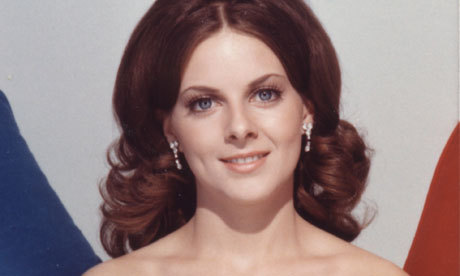
The show also features norm reference cards that always used white women as a standard for measuring and calibrating skin tones when printing photographs. The series of “Kodak Shirleys” were named after the first model featured. Today such cards show multiple races.
Date liked: 2013/11/08 01:11:37
12927 Tumblr notes
Liked from: Notational
Notational reblogged from: sloganonthewall
Originally posted by: abagond-deactivated20181204
Post tagged:
No tags
Automatically generated tags:vintage 374
portrait 239
retro 207
woman 119
1960s style 16
glamour 6
blue eyes 4
brunette 3
earrings 3
voluminous hair 1